


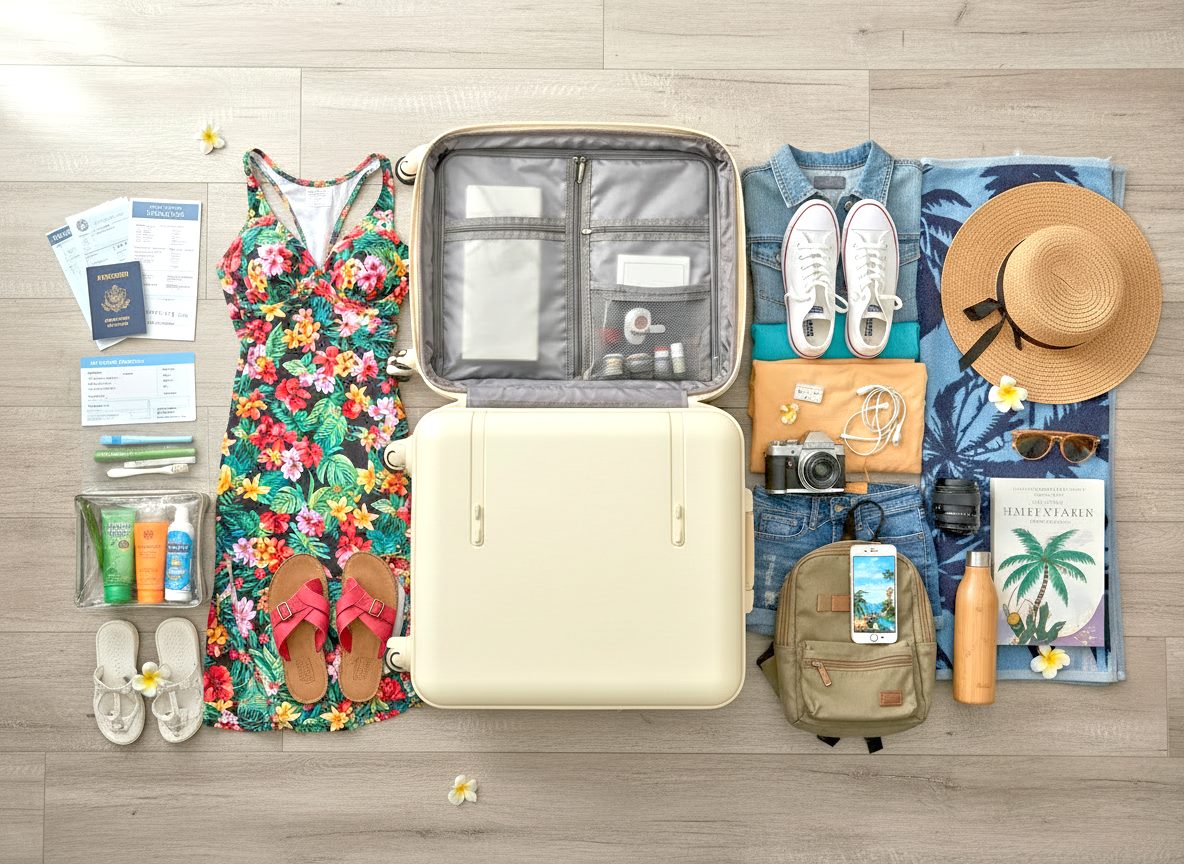
Before confirming your Hawaii trip, take a moment to review your travel documents, identification, and essential travel items. Preparing these in advance can help prevent unnecessary stress and allow you to enjoy a smoother and more relaxing Hawaii vacation from start to finish.
Entry Requirements for International Travelers
International visitors traveling to Hawaii must carry a valid passport for entry into the United States. Depending on nationality, some travelers may also require a visa or an electronic travel authorization such as ESTA before departure.
Many countries recommend that passports remain valid for at least six months beyond the travel period, so travelers should confirm passport validity before departure.
For entry into the United States, required travel authorizations are often checked before boarding the flight, not only during immigration upon arrival. Travelers may also be asked to provide supporting information such as a hotel address, return flight ticket, or travel itinerary during immigration procedures.
Digital copies stored on a mobile device are usually sufficient for most travelers.
Domestic Travel Within the United States
Hawaii is part of the United States, so travelers arriving from the U.S. mainland do not go through international immigration procedures.
However, a valid government-issued photo ID is still required for domestic flights within the United States. Acceptable identification includes a REAL ID–compliant driver’s license, a state-issued ID, or a passport.
In short, international visitors must prepare the required travel documents for U.S. entry, while travelers flying from within the United States can travel to Hawaii as a regular domestic flight.
Rental Car & Driving Essentials
Many visitors choose to rent a car while traveling in Hawaii, especially for island tours outside of Waikiki. Travelers should carry a valid driver’s license while driving in Hawaii, and some nationalities may also require an International Driving Permit (IDP).
Parking fees are common at hotels, shopping centers, and popular attractions in Hawaii, particularly in Waikiki. Travelers should also be aware that vehicle break-ins can occur if valuables are left visible inside the car. Leaving valuables visible inside parked vehicles is strongly discouraged.
Hawaii Weather & Light Clothing
Although Hawaii is warm throughout the year, indoor air conditioning can sometimes feel cold, especially in shopping centers, restaurants, tour buses, and evening cruises. Bringing a light jacket or hoodie is recommended even during summer travel.
Brief rain showers are also common in Hawaii, so a compact umbrella or light rain jacket may be useful during outdoor activities.
Mobile Phones, Charging & Power Outlets
The United States uses 110V electricity and Type A/B power outlets. Travelers from countries using different voltage systems may need a power adapter or voltage converter for certain electronic devices.
Portable chargers are also highly recommended for long sightseeing days, beach activities, and full-day island tours.
Tips & Cash Culture in Hawaii
Credit cards are widely accepted throughout Hawaii, but carrying a small amount of cash can still be helpful for tipping, small shops, parking, or local food stands.
Tipping is a common part of U.S. culture, especially at restaurants, hotels, and tour services. Travelers should plan accordingly during their stay.
Personal Medications and Health Essentials
Fatigue from long flights, time zone changes, and dietary differences is common while traveling. It is recommended to bring basic medications such as cold medicine, digestive aids, or pain relievers. While pharmacies are available in Hawaii, travelers may prefer familiar brands or medications they regularly use.
Ocean & Sun Safety in Hawaii
Hawaii’s ocean conditions can change quickly depending on weather and surf conditions. Travelers should always follow posted warning signs and lifeguard instructions when swimming or participating in ocean activities.
The Hawaiian sun can also be much stronger than expected, even on cloudy days. Reapplying sunscreen regularly and staying hydrated are strongly recommended.
0 Comment